
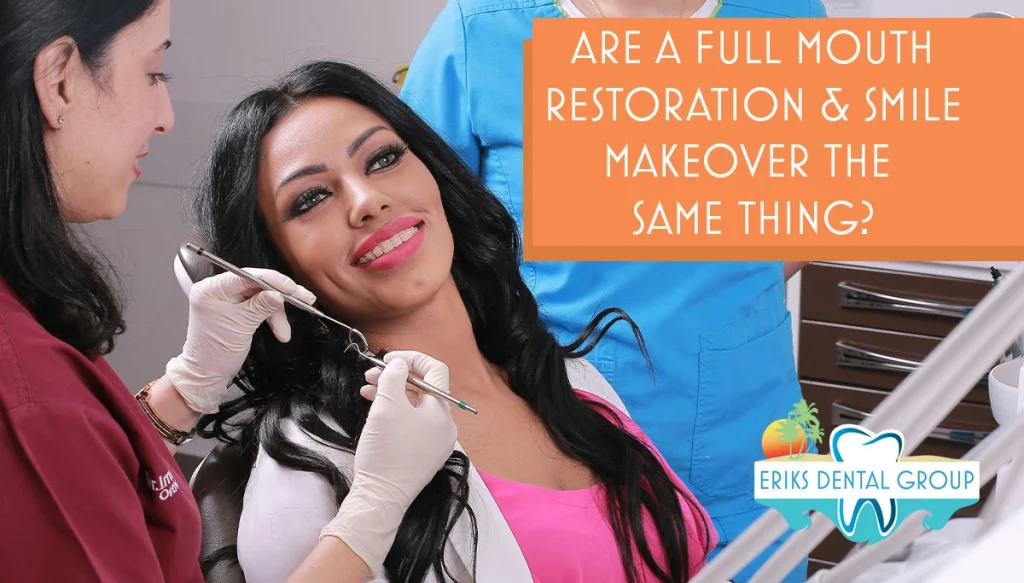
If you are looking for ways to improve your smile, you will inevitably come across the terms full mouth restoration and smile makeover. They are often used interchangeably, which can make it hard to know if they refer to the same type of treatment.
While both options are designed to improve your smile, they are not identical. Each follows a different approach and is recommended for different dental needs. Knowing the distinction can help you better understand your options and plan your next steps with confidence.
What Is a Full Mouth Restoration?

A full mouth restoration is a comprehensive dental treatment plan designed to rebuild and restore the health, function, and structure of the entire mouth. It is typically recommended when multiple teeth are damaged, missing, worn down, or no longer functioning properly. Instead of focusing on a single concern, a full mouth restoration addresses several dental issues at the same time to achieve a stable and functional result.
A full mouth restoration often includes a combination of procedures that work together to improve how the teeth fit and function. The goal is to support proper biting, chewing, and speaking while creating durable outcomes. Restoring balance across the mouth also helps reduce uneven wear and future dental problems.
Every full mouth restoration is planned around the patient’s specific needs. Dentists evaluate the teeth, gums, jaw alignment, and bite before outlining a treatment plan. Taking a complete approach allows a full mouth restoration to improve comfort, function, and overall oral health in a predictable and long-term way.
What Is a Smile Makeover?

A smile makeover is a dental treatment approach focused on improving the appearance of the smile. It is typically chosen by individuals who are satisfied with their overall oral health but want to enhance how their teeth look. A smile makeover is planned with visual goals in mind, such as achieving a more uniform, brighter, or well-balanced smile.
Smile makeover treatments are customized based on a person’s preferences and existing dental condition. The process considers factors like tooth color, shape, size, spacing, and alignment. You can complement it with professional teeth whitening to create a cohesive and natural looking result that fits the patient’s facial features.
Unlike restorative treatment plans, a smile makeover centers on cosmetic improvement rather than correcting functional problems. The focus remains on refining aesthetics while maintaining healthy teeth and gums.
Key Differences Between A Full Mouth Restoration & A Smile Makeover
Understanding how these treatment options differ helps clarify which approach aligns with your dental care needs. While both can improve the appearance of a smile, they are designed for different situations and outcomes. Here are the differences
Purpose and Focus
A full mouth restoration is planned to address widespread dental concerns that affect oral health and function. The focus is on restoring balance, strength, and proper bite alignment across the entire mouth. Improving appearance is part of the outcome, but it is not the primary objective.
A smile makeover is focused on enhancing how the smile looks. Treatment decisions are guided by visual goals rather than functional correction. The emphasis remains on aesthetics while maintaining existing oral health.
Scope of Treatment
A full mouth restoration often involves multiple procedures that work together as part of a comprehensive plan. These treatments are coordinated to rebuild or repair teeth throughout the mouth. The process addresses structural issues that require a broader approach.
A smile makeover typically involves a narrower range of treatments. The procedures selected are chosen to improve the visible aspects of the teeth. The scope remains limited to cosmetic enhancement rather than full dental reconstruction.
Treatment Timeline and Complexity
A full mouth restoration usually follows a detailed and carefully sequenced plan. Treatment may occur in stages to ensure proper healing and long-term stability. The process reflects the complexity of addressing multiple dental concerns at once.
A smile makeover is generally more straightforward in comparison. Many treatments can be completed within a shorter timeframe. The overall process depends on the number of cosmetic changes being made.
Functional Outcomes
Restoring proper function is a central goal of a full mouth restoration. Treatment supports comfortable chewing, clear speech, and balanced bite alignment. These functional improvements help maintain long-term oral stability.
A smile makeover is not intended to correct functional issues. The results focus on visual changes such as shape, color, and alignment. Functional performance of the teeth typically remains unchanged.
What Issues Each Treatment Can Address

Understanding the types of concerns each option is designed to handle can further clarify the difference between them. While both treatments aim to improve the smile, they address very different dental situations. The focus depends on whether the concern is related to function, structure, or appearance.
Dental Concerns Addressed by a Full Mouth Restoration
A full mouth restoration is used when multiple teeth are affected by damage, wear, or loss. It helps address issues that interfere with normal biting, chewing, or speaking. Treatment is planned to restore stability and overall oral function.
This approach is often recommended when dental problems affect several areas of the mouth at once. Conditions such as severe tooth wear, missing teeth, or bite misalignment are commonly addressed. The goal is to rebuild a healthy and functional foundation for long-term oral health.
Cosmetic Concerns Addressed by a Smile Makeover
A smile makeover is suited for patients with generally healthy teeth and gums. The focus is on improving visible imperfections that affect the look of the smile. These concerns are cosmetic rather than functional.
Common goals include improving tooth color, correcting minor shape irregularities, and enhancing overall symmetry. Treatment is designed to refine appearance without altering how the teeth function. The result is a more polished and visually balanced smile.
How to Decide Which Treatment You Need
- Extent of tooth damage or wear
- Presence of missing teeth or bite issues
- Overall oral health and stability
- Desired focus on function or appearance
Visit Eriks Dental Group for Personalized Dental Care
A full mouth restoration and a smile makeover are not the same, even though both can improve the way your smile looks. Each option serves a different purpose and is recommended based on specific dental needs. Understanding these differences helps you move forward with clarity and confidence.
Choosing the right treatment starts with working with a dental team that takes a complete and personalized approach. At Eriks Dental Group, patients receive thorough evaluations and customized treatment planning focused on long-term oral health and predictable results. Whether your needs involve comprehensive restorative care or targeted cosmetic improvements, our team provides clear guidance every step of the way.
If you are considering treatment and want professional insight tailored to your smile, we’re well-equipped to help you make the right decision. Schedule a consultation to understand your options and create a plan that supports both your dental goals and overall oral health.