
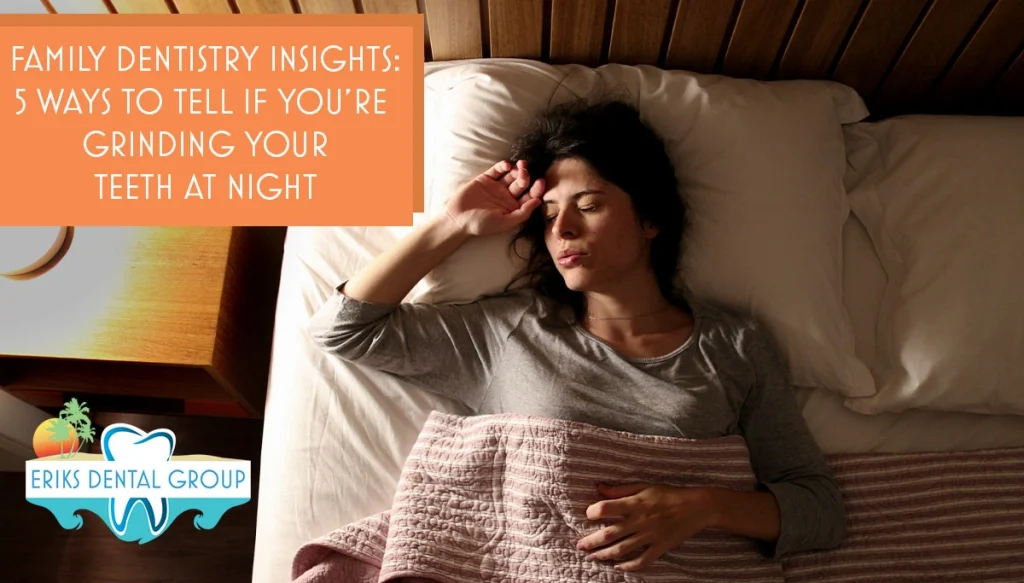
“Do you grind your teeth?” —It’s something your dentist may have asked you during your last visit. They aren’t doing so as a formality with all patients — they’ve most likely seen signs that this is the case. In many cases, we have no idea that we’re actually doing it, because it all happens under the cover of darkness while we sleep at night.
There are various reasons why people grind their teeth at night, and if you do, you may want to take some action against it. You don’t need to be a dentist to know if you grind your teeth at night, as there are a few simple signs that you can look out for yourself.
In this article, our family dentistry shines a light on exactly what to look out for.
The Risks of Grinding Your Teeth

Before we share the signs of what may indicate that you grind your teeth while you are tucked into bed at night, it’s important to understand what risks this poses. It’s called sleep bruxism and shouldn’t be ignored.
If you think about what happens when you rub two stones together — they will wear each other down, and it’s the same with your teeth. This may seem self-explanatory, but there’s far more to it than just shortening your teeth over time. Your nocturnal grinding can wear away enamel, crack your fillings, and even push your teeth out of alignment. In more serious cases, it could result in ongoing jaw pain and difficulty in opening and closing your mouth.
How Do You Know if You Grind Your Teeth at Night?
To better understand if you grind your teeth at night, there are a few things to look out for. Some of these don’t only indicate grinding, so it’s best to always consult with your family dentist if you are unsure.
1. Jaw pain or a tight jaw in the morning
If you wake up in the morning to a pain in your jaw or a tightness that can’t be explained, it could indicate that you grind your teeth at night. The reason your jaw may be sore is that your muscles have been working through the night, grinding your teeth while you slumber. You’ll find that the pain goes away as you go through the morning, as you’re no longer clenching them as you did during the night. The same way that your legs get sore after exercise, the muscles in your jaw experience the same pain and stiffness after a night of work.
You may notice a few of the following:
- It’s difficult to open your mouth first thing in the morning
- Cheeks or temples that feel tired or “worked out” when you wake up
- A clicking, popping, or dull headache near your ears when you chew or yawn
If you experience any of these symptoms, visit your local dentist to have your teeth checked. They’ll very quickly be able to confirm if you grind your teeth and advise on what to do about it.
2. Unusual wear, cracks, or flat edges on your teeth
As with the rock example above, when your teeth constantly rub against each other, they will start to change shape as you grind away at them. You may notice that your enamel is worn down, there is a flattening of your cusps (the pointed peaks on your teeth), or that small chips or fractures have started to appear without any incidents that you can recall.
You’ll mostly notice these on the biting edges of your front teeth and on the chewing surfaces of your molars.
Here are a few signs to look for:
- Teeth that look shorter or more squared off than they used to
- Rough, sharp edges that catch your tongue during the day
- Small cracks or broken corners on your teeth, or fillings that don’t seem to last
3. Headaches often, especially in the temples
You may find that you are waking up with a dull headache and/or pain around your temples and behind your eyes. There are many reasons for this, and it’s always best to consult with a medical professional if the issue persists, but the culprit could be that you are grinding your teeth at night. This is especially true if you see any of the other symptoms we’ve listed here.
The reason this happens with teeth grinding is that the muscles that control your jaw are also connected to the sides of your head. Working them overtime can trigger tension‑type headaches that are worst in the morning and tend to improve as you get on with your day. People often blame these headaches on overindulging the night before, not sleeping well, or sitting in front of a screen all day, but it may be your nighttime activities.
4. Tooth sensitivity without an obvious cause
If you feel sudden sensitivity to hot, cold, or sweet foods, but you don’t have any cavities, you may be wearing down your enamel at night. This protective enamel layer can become thinner due to the constant friction of the grinding, resulting in them becoming more sensitive.
Sensitivity from bruxism can:
- Affect a few teeth at once rather than just one
- Come and go depending on how intense your grinding has been
- Show up alongside tiny cracks or worn edges
If you are experiencing these sensitivities, it’s best to visit your family dentistry practice and ask for a thorough exam. An X-ray will help to rule out any decay or infection and confirm if grinding is the culprit.
5. Your partner hears grinding, or your sleep feels restless
A more obvious sign is not one you can check yourself, but rather one to ask your partner who sleeps alongside you each night. When you grind your teeth, they make a noise, so ask that special someone if they hear grinding or crunching noises while you sleep at night.
Even if they don’t hear anything, you may wake up in the morning feeling tired and unrested. People with sleep bruxism can have other sleep issues like snoring, obstructive sleep apnea, or experience waking up often during the night. The combination of muscle overuse and a bad night’s sleep can leave you feeling exhausted, sore, and irritable in the morning.
Ask Your Family Dentistry Practice to Check For Signs Of Sleep Bruxism

The best way to find out if you grind your teeth at night is simply to visit your local dentist and have them check your teeth. It’s a non-invasive inspection that only takes a few minutes. The good news is that there are solutions to reduce the impact of your nocturnal grinding. A custom night guard that you wear while you sleep is one of them, which drastically reduces the negative impacts of sleep bruxism.
If you live in South Florida and are unsure about whether or not you grind your teeth at night or have one or more of the above symptoms, visit Eriks Dental Group, a family dentistry in Boynton Beach with a team of qualified South Florida dentists who care for their patients’ teeth as if they were their own.
Don’t let sleep bruxism ruin your teeth when there are affordable solutions. You can book an appointment by calling 561-733-4004 or by sending your contact information, and our dental team will get right back to you.